
Native Gardener’s Corner-Member’s Tips, Tricks, and Techniques
Dan Songster, of the Orange County Chapter of the California Native Plant Society (OCCNPS), compiled this article in which chapter members and local experts share their experience gardening with California native plants. Dan’s request for November and December of 2026 was:
With weather extremes (including rain, heat, and winds) becoming more frequent and intense, how confident are you about the continued vigor and health of your native garden and what steps (if any) are you taking to soften the blows of such severe weather?
Sarah Jayne-“Future years may make it difficult to maintain a garden in summer, but I am planning on using plants that have survived for years in the local natural areas, like citizens of our coastal sage scrub for example. They may not be particularly attractive in harsh summer months, but winter rains, (even excess amounts), should bring about an abundant revival of most of these local plants in the early winter through spring months. Yes, we may lose some favorites, but there’s a world of native desert species to be explored and tested in our gardens.”

Elizabeth Wallace-“We experienced the hottest summer ever in the inland native plant gardens at Vera’s Sanctuary in Trabuco Canyon. Most of the native plants survived beautifully with their usual care: a once a month deep overhead water. A few Baccharis pilularis ‘Pigeon Point’ plants struggled. I usually love this plant for its grassy green toughness, but after this summer, I am doubling down on local natives and admiring them now more than ever.”
Greg Rubin-“There has been a very detectable change in our weather patterns just in the time since I got my contractor’s license. The great “buffer” for more extreme conditions has been good quality, appropriate mulch, and light irrigation. I’m a big fan of efficient, low volume overhead watering (where practical) rather than ground level soil saturating drip irrigation. When we water diffusely over the entire planting (a la rainfall), we are encouraging the development of an unbroken soil rhizosphere, including mycorrhizal fungi, in a way that is both natural and aerobic.

People will often comment that the soil under the mulch remains somewhat dry, to which I respond “Exactly!” This is not a lawn, and we want to avoid heavy saturation, especially during the warm summer months on established plantings. The key is that the moist mulch is acting as a vapor barrier which maintains a level of light soil humidity over an extended period, much like the thin, dense natural duff layer that forms in shrubland communities. This is one of many reasons that I prefer shredded redwood bark mulch, which is fibrous and densifies easily with the overhead irrigation (desert, coastal strand, and grasslands prefer inorganic mulch). So, for us the ability to add strategic, light supplemental watering during hot weather events and the ability of clean, fibrous, consolidated mulch to maintain appropriate soil humidity levels is critical.

I should also say something about how plant selection is being affected by these changes. Local southern California species are proving to be much more resilient and forgiving of the changing climate (including occasional supplemental irrigation) than I ever thought possible. We need to keep expanding our plant palette with more southern California species appropriate for landscaping (including northern Baja). We have all the components available to create beautiful landscapes. The only area where we are somewhat lacking is evergreen groundcovers. I encourage everyone to keep an eye out for suitable local low-growing selections from the wild.”

Tina Cremer-“Before I planted my California native garden, I had 24” mounds/berms of loam and sandy loam delivered to my garden. My native plants have always done well in those spots, especially since I realized that they need more irrigation than I was giving them. Now they have begun to thrive.
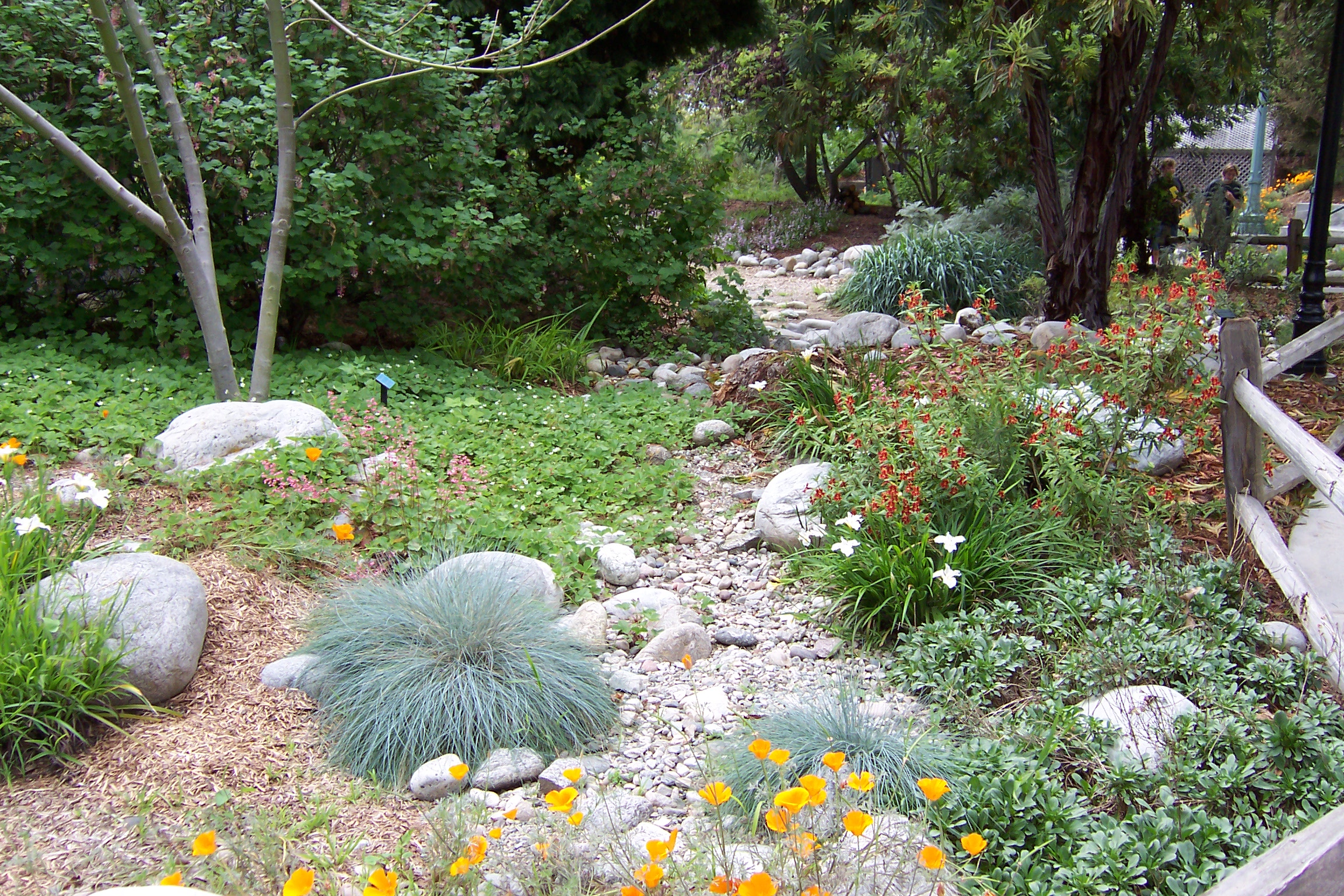
I did the same in my front yard, however when excavating the 2 feet deep dry riverbed, we created mounds of clay and the last time we had too much rain, I lost a beautiful Opuntia cactus and some natives that were planted on the clay soil. Now most of my natives are in the sandy loam areas so I am hoping there is enough drainage for them to survive.”
Lori Whalen-“I’ve seen some heat stress in native plants both in my own garden and at the Environmental Nature Center (ENC), where I work. We’ve lost a few specimens at the ENC, and I’ve lost at least one in my garden as well.
At the ENC, we’ve also lost several mature trees over the past few years during strong winds, sometimes following heavy rains when the soil was saturated and roots may have had less holding power. Some were also weakened by pathogens, which I suspect may be becoming more problematic as extreme weather stresses trees and makes them more susceptible. I’m no expert though!
At home, when extreme heat is forecast, I give my garden a good deep soak before the heat arrives, then avoid watering during the heat wave.“
Terry LePage-“What counts as severe here a few miles from the coast in a somewhat shady garden isn’t so severe, really. I’ll just continue to apply water monthly when the sky is not forthcoming, let go of what doesn’t thrive, and nurture the volunteers, as they are clearly making it work. Homeowners association pruning and watering is my biggest threat!”
Leon Baginski-“During the hot spells I add mulch (native compost) and water with nighttime sprinkles of a couple times a week. I do selective pruning of weakened or injured foliage and then pray for cooler weather and rain.”

Curt Craft-”I am confident that my native garden will continue to thrive. With the heat we can expect, my main concern will continue to be watering, since I only hand water. Fortunately, they don’t need a lot of watering especially my large pine tree in the front yard providing abundant shade during the summer months.”
Dan Songster-“Despite weather extremes, I’m very confident in the native plants I have chosen and planted over the years. Still, I do admit to relying on some of the hardiest of my favorite natives plants more frequently, and use the more tender or rare plants in more sheltered spots in the garden (such as in spots slightly shaded from afternoon sun).
I am also leaning towards using desert and desert edge plants that don’t have pathogen problems with “off season” summer rain. I am ready to use shade cloth on the southwest facing side of a few young plants that I treasure next time there is a prolonged heat event. And as always, this winter we will still be making attempts to keep water on site–percolating downward–allowing for deep watering of our mature trees and large shrubs.”

Thank you to everyone for sharing your experience with California native plants in our changing climate. Our question for the next Tips and Tricks article is:
Happy New Year! What is your favorite rainy day, garden-based reading material? Design magazines, seed and plant catalogs, botanical-themed mysteries, online blogs or…?
Leave a Reply