
This column, compiled by guest author Dan Songster, is a regular feature offering chapter members and local experts a chance to briefly share information on many things related to gardening with natives.
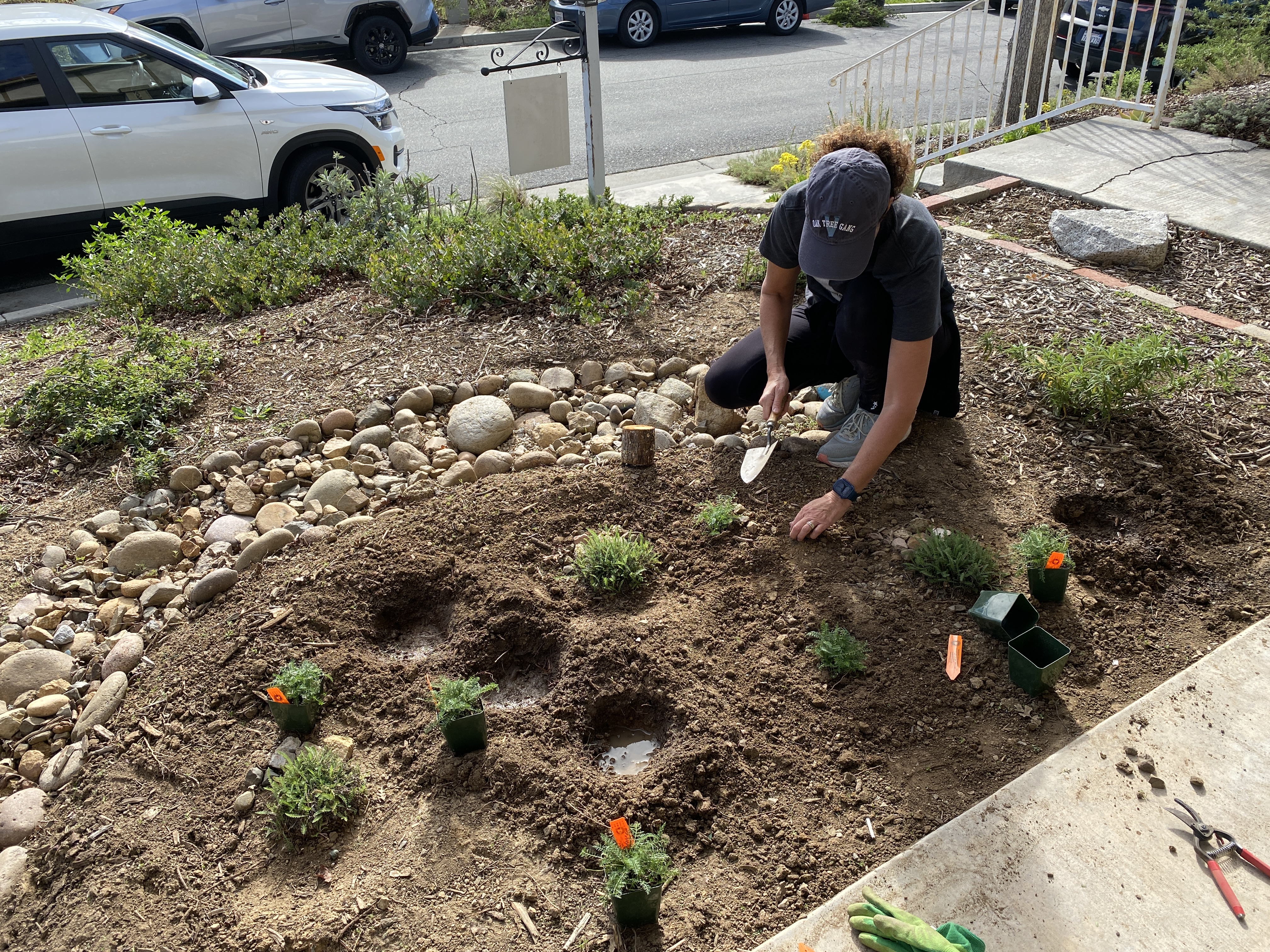
With planting season here, please share any tips you may have on successful installation of native plants in your garden:
Nancy Harris-“I have found after planting many, many plants, that one needs to totally hydrate the plant in its container, then dig the proper hole and fill it with water at least three times or more and allow it to drain into the ground. Build a berm around the plant and mulch, mulch, mulch. If ground is difficult to dig, make tiny basin and pour some water on it and dig until it needs more water. Continue this process until hole is correct size for the plant, allowing the plant to sit two inches above the level ground.”

Alan Lindsay-“I think most of my new plant failures were caused by waiting too long to put them in the ground. Now I try to get them planted within a week of purchase and water the container everyday until then. I can’t say for sure whether this helps but I like to gently tease or shake off any excess potting mix and back fill with my own moist local soil mixed with the excess and DG (or equivalent.) One other suggestion is to document everything–where obtained, date of purchase and planting details, etc. I have even taken pictures.”

Thea Gavin-“The best advice I have learned and used is to fill and RE-fill the planting hole with water many times before planting during the dry time of year. We’ve also put canister water filters on our hose bibs and like to think it makes the plants happier not to have so much chlorine in their life.”
Laura Camp-“I just planted a garden in August this year. The key to success was primarily hydration–plenty of water during planting and establishment. Those root balls can’t afford to dry out. Second lesson was that the more exposed the area, the more difficult it was to establish, and I wish I had provided some temporary shade in certain places. The plants in the shade and in part shade had little trouble.”

Dan Songster-“It takes more time, but making the planting hole much wider than you might think really helps the plant get new roots into surrounding softer soils. Because I am normally planting in clay soils, I almost never use organic amendments (like wood products) in the backfill. I will use decomposed granite to improve soil structure a bit. I generally do not like the soil mix that plants come in and have played with removing some of the wood product they are planted in by soaking the rootball in a large bucket of water and gently teasing out roots and getting rid of the lighter wood chips. Of course, one has to be careful of what plants this is done on. For instance, disturbing the roots of any of the plants in the poppy family can be fatal.”
More really good information from other experts:
- Tree of Life Nursery planting instructions
- Mike Evans Plant it Right Video
- CNPS “Planting Tips”
- Las Pilitas Nursery Tips
And lastly, we offer this excerpt from Ron Vanderhoff’s How to Dig a Hole:
- First, dig the right size hole. Planting holes should be wider than they are deep, especially in clay soils. Dig the hole three or four times as wide as the container and just slightly deeper.
- Second, planting holes should be irregular in outline, with jagged edges and creases. Round, smooth-sided holes might be easier to dig, but they discourage the roots from exiting the planting hole.
- Third, fill the hole with water while it is empty and proceed with planting after the water has completely drained. If the water drains through the hole at less than an inch per hour, many plants might fail without complex adjustments. By soaking the hole first, the drier surrounding soil will not wick the water away from the rootball.
Good luck gardeners! Follow these tips and you might just end up with a thriving native plant oasis.

Leave a Reply