
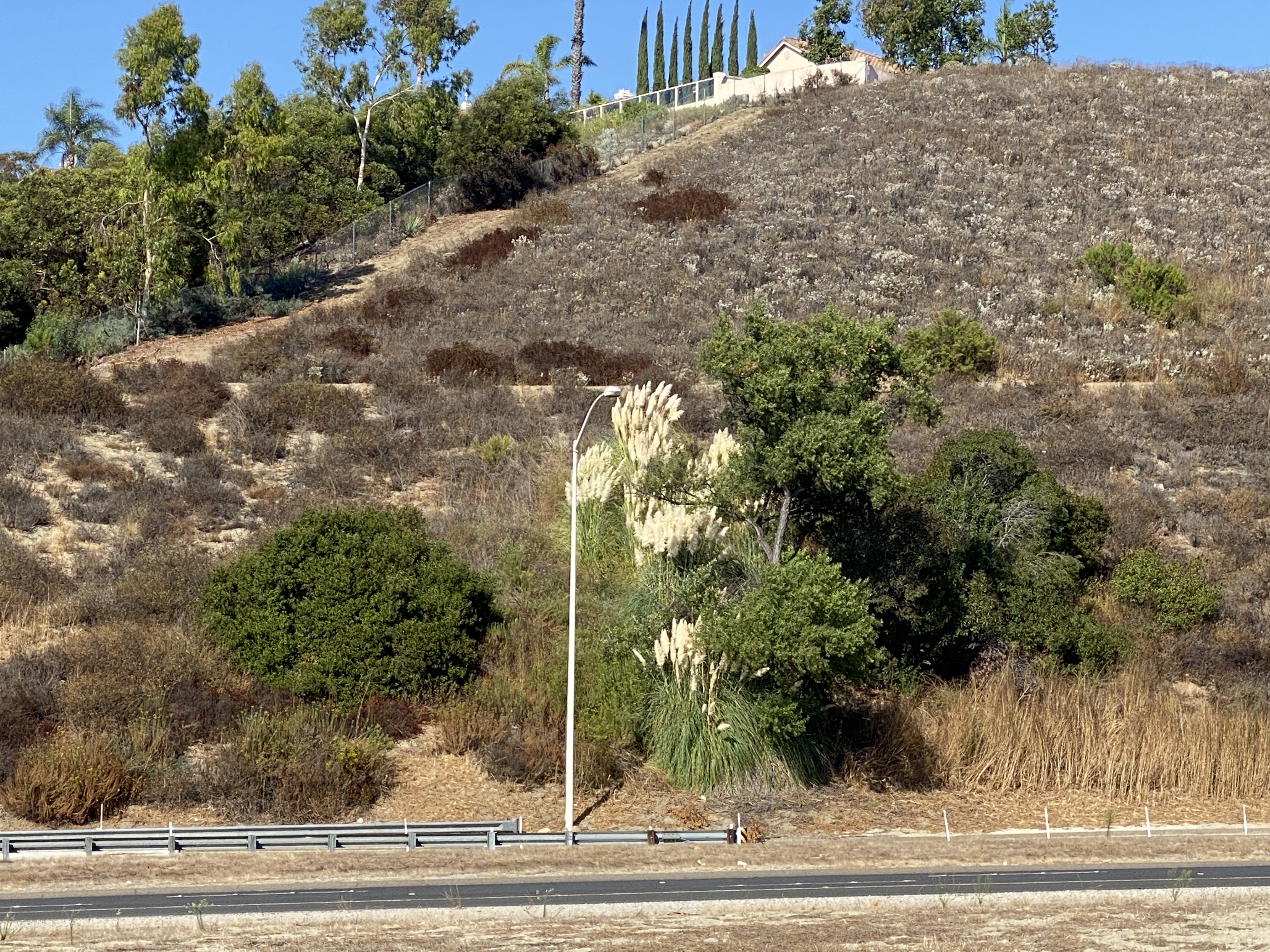
It can be discouraging to drive by and see stands of pampas grass (Cortaderia selloana) or fountain grass (Pennisetum setaceum) growing in commercial, private, and public spaces in Southern California. These plants (and others…see Cal-IPC.org for more information) are prolific seed producers and can outcompete native plants in coastal sage scrub and chaparral.

Cal-IPC conducted a survey in 2019 that showed a tenfold increase in fountain grass in the Nature Preserve of Orange County and Nature Conservancy easement lands.

How to Help
How can you help educate landowners about the spread of invasive plants near you? Below are some ideas that you can try that might make a difference in your neighborhood:
- Locate and identify the invasive plant(s). Take photos with your location services on your phone. GPS points are best, but if not, make a detailed description of the location. Take several diagnostic photos of the plant(s), especially very close photos of the flowers, fruit, and leaves from various directions.
- Research the California Invasive Plant Council and make sure the plant is invasive. Remember, an invasive plant and a non-native naturalized plant are not the same thing.
- Find out who owns the land. Note: At first, it may be difficult to know who owns the land where the invasive plants are growing. If city or county property, call the agency’s Public Works Department and tell them where the invasive plants are growing. Most Public Works Departments know who owns the land and will give you contact information for the HOA, Agency, County, etc. when you give them the exact location.
- Send an email with photos of the invasive plants and the exact location to the landowner or land manager. Include your name, email, and phone number. If you cannot locate an email address, try calling. Include the common and scientific name of the plant(s). If the invasive plant is in Orange County, be sure to copy invasives@occnps.org.
- Optional, but encouraged: Post an observation of the invasive plant occurrence on CalFlora. You can attach photos as well. This will help document the details for land managers and the invasive plant community. You may also see if the location has already been reported and sometimes if it is currently being managed at the site.
- Remember that most landowners aren’t aware the plants that have been installed are invasive. And they may not be aware the plants that are invasive are popping up on their property from wind-borne seeds. Reach out with the intention to help.

What Might Happen
This is not a quick or easy process, but if you stick with it, you might see some results.

If you are bothered by invasive plants growing in your city, take a photo, plot the location, and ask for help. If we don’t ask, nothing will get done. It’s the least we can do to try to conserve the biodiversity of our wildlands.


Leave a Reply