
Category: Gardening with Native Plants
-
Spring to Life
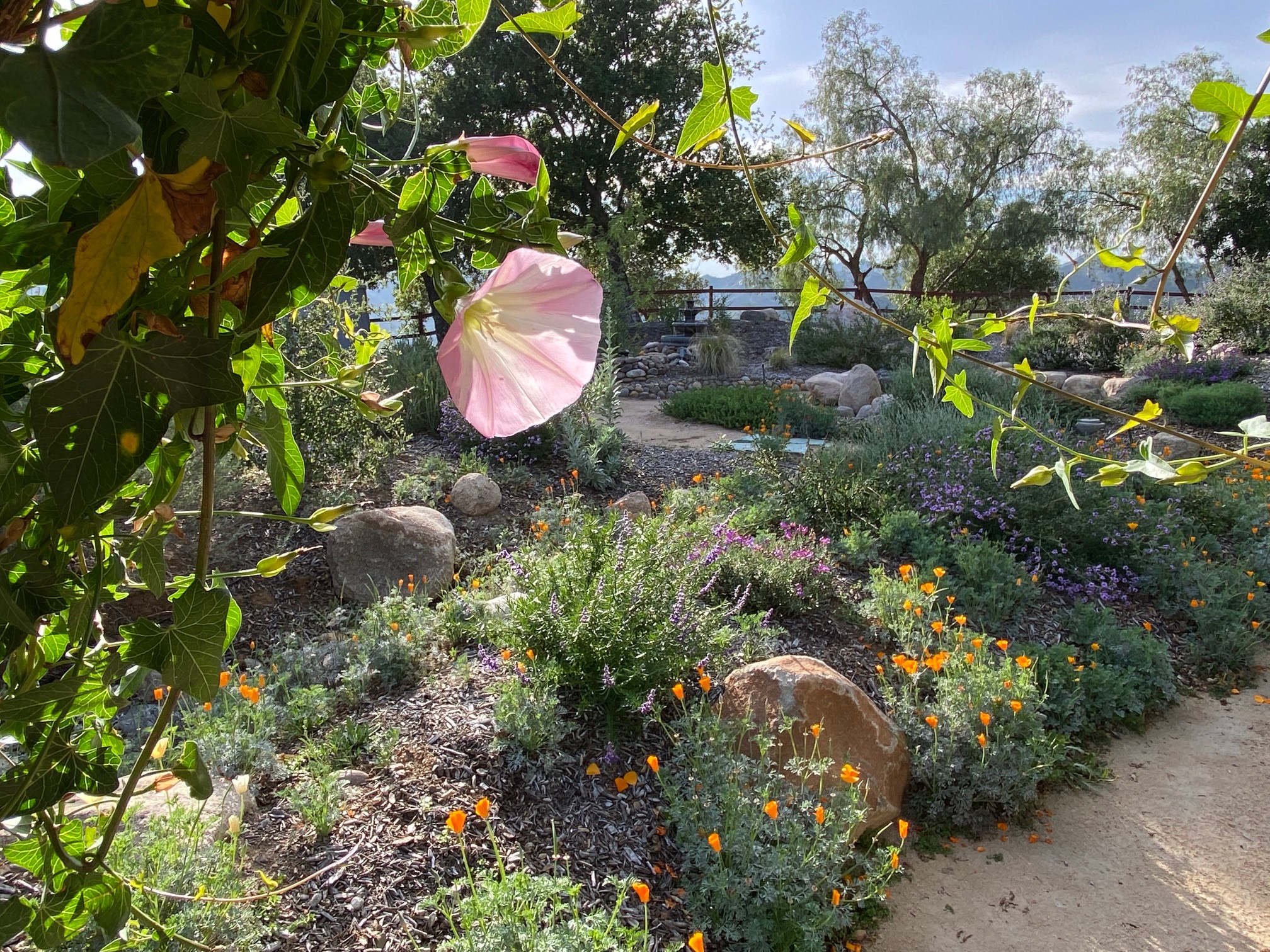
We have had less rainfall than normal in Southern California, so what is a plant to do? Bloom anyway.
-
Water for Wildlife

Rainfall has been scarce in Southern California in 2022. After a rainy December, we’ve had warm weather and windy conditions for most of January and February.
-
Planting a Seasonal Meadow

Last December 2021, we created a seasonal meadow of local grasses and wildflowers that would provide beauty, color, and life after winter rains in a 12,000 square-foot park space at Vera’s Gardens.
-
Creating an Avian Garden

In September, we began work on the east side of Vera’s Sanctuary in Trabuco Canyon, where we created an Avian Garden, a 10,000-square-foot project that is interconnected with two large front lawns.
-
Helping a Canyon Landscape

For the past two and a half years, a group of gardeners and I have volunteered to rehabilitate the landscape of a five-home cul de sac in Trabuco Canyon. The site totals 12 acres and is owned by the nonprofit, The Teen Project…
-
Flowers in Bloom as Summer Wanes

Spring in southern California is the biggest and showiest blooming season for native plants. Poppies, verbenas, and penstemons are strutting their stuff after a cool, rainy winter. But by late summer, the plants are pulling back, waiting out the long dry season and protecting themselves from the 90 degree days. How do our pollinators, birds,…
-
Summer Blooms for Butterflies

You may be aware that milkweed is the only food that monarch caterpillars eat. Monarch butterflies, however, need more than just milkweed to sustain them. Monarchs and other butterflies need gardens that have different species of summer-flowering plants to provide nectar. Today’s post features five terrific summer-blooming California native plants for butterflies that are great…
-
Late July and the Woolly-Pod Milkweed

Every year in late July, I hike along Vista Trail in O’Neill Regional Park to observe two healthy populations of wild milkweed growing along the trail. Last year at this time, the woolly-pod milkweed (Asclepias eriocarpa) plants were in full flower and bustling with bumblebee activity and hungry caterpillars.
-
What is Milkweed?

Milkweed is a flowering plant named after a milky latex substance that is exuded when the plant tissues are damaged. Milkweed’s scientific name (genus) is Asclepias, named after Asclepius, the Greek god of medicine. Milkweed is the host plant for monarchs because the caterpillars rely solely on milkweed for food. The latex in milkweed plants…
-
A Chemical-Free Garden for Monarchs

Is it possible to have a beautiful garden without using pesticides and herbicides? In my experience, it has been easy to have a healthy garden that doesn’t require chemical pest control. Reducing our reliance on chemicals protects butterflies, and invites wildlife to step in and manage the unwanted insect population. Birds feed their offspring mostly…
-
Simple Support for Western Monarchs

Every winter, volunteers travel to western monarch overwintering sites to count butterflies roosting in trees near the coast. Last winter, fewer than 2,000 monarch butterflies were found overwintering along the California coast. Compared to 1997, when it was estimated that more than 1 million monarch butterflies overwintered, the numbers from the 2021 count were historically…
-
Monarchs Arrive for Summer

Have you noticed monarch butterflies flying around your California yard this summer? Western monarch butterflies are an iconic butterflies that delight us with bright orange plumage, black stripes, and white polka dots. They are so large, they cast a shadow when they fly overhead. After hearing about the historically low overwintering monarch butterfly count last…