
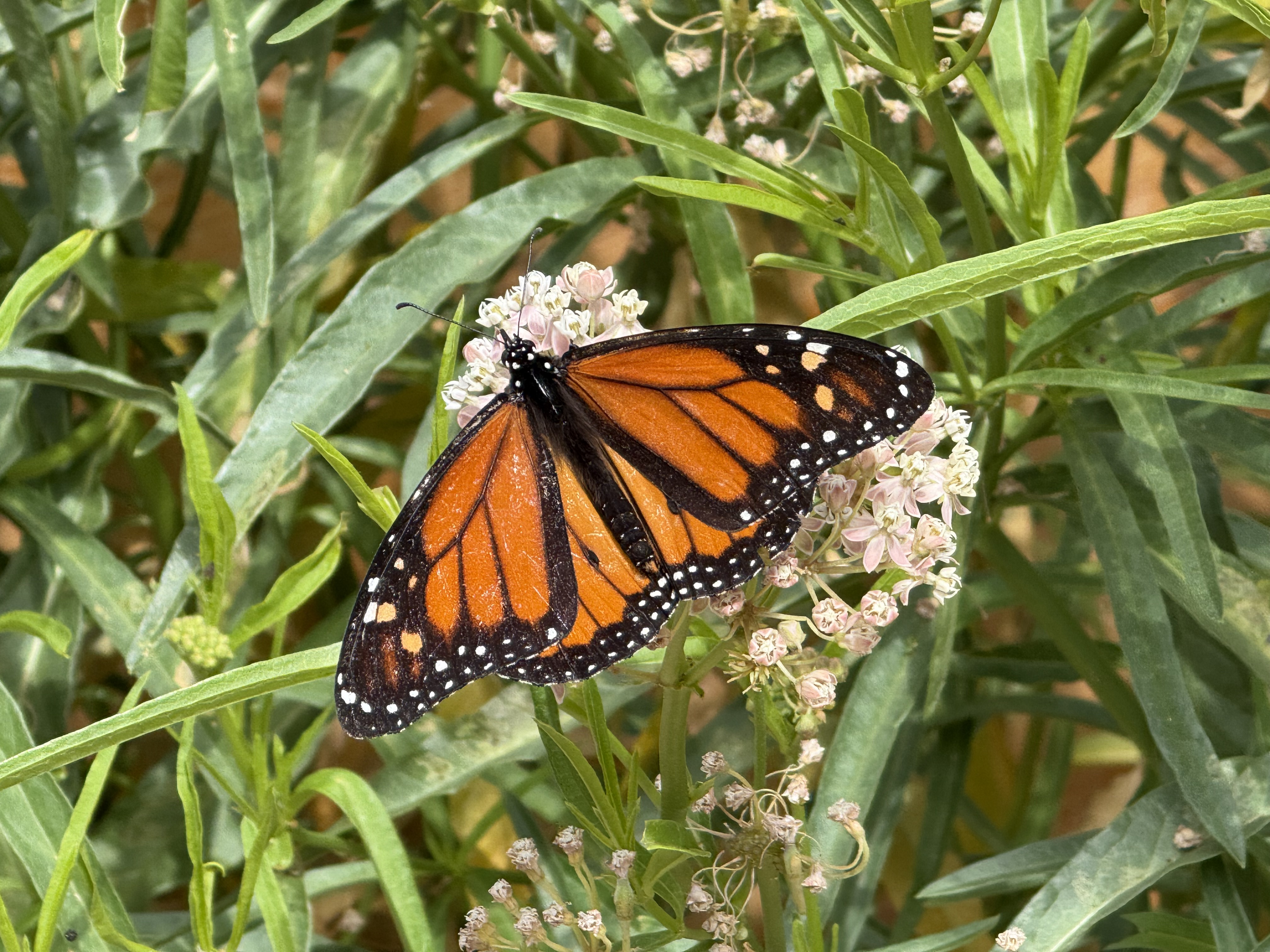
Guest author Laura Camp, co-president of OCCNPS, submitted this article to highlight the importance of including native plants in our home and commercial landscapes to support birds, butterflies, and bees.
In 2018 at the California Native Plant Society Conservation Conference, Doug Tallamy, entomologist and author of Bringing Nature Home, delivered an imperative: We must re-nature our developed areas with native plants.
Tallamy highlights the critical link between native plants and local wildlife, arguing that using native species in home gardens is essential for supporting biodiversity.

I have been involved in the cause of planting natural habitats since 1996, and yet I was astounded by the power of Tallamy’s message. His riveting presentation was filled with scientific research, beautiful birds, and more caterpillars than you can shake a stick at.
Tallamy’s restoration of native plants in his own yard in Pennsylvania yielded an incredible 700+ documented species of caterpillars.
At CNPS, we often talk about all the myriad reasons to plant native plants – beauty, saving water and resources, and highlighting our California heritage. But Tallamy and other authors at the 2018 conference distilled down one important message: California native plants are part of our local food web, and non-natives are relatively inert here.

Tallamy’s research documents how infant birds, more than adult birds, depend for survival on caterpillars that live only on specific native plants and not on exotic plants. The populations of insects, and the birds that depend on them, are collapsing worldwide, and the wild areas remaining are not enough to support their existence.

Are you familiar with how monarch butterfly populations depend on their caterpillar’s access to native milkweed plants? Multiply that well-known example by thousands of different species of butterflies and moths, and then multiply again by the thousands of birds and other creatures that are part of the food web that depends on those caterpillars. Supporting native habitats has an exponential impact.

Since 2018, Tallamy has spearheaded a grassroots movement called Homegrown National Parks. We can all be a part of this exciting goal to remove invasive species and to re-landscape our lived spaces to support life.
Knowledge is the first step, and the California Native Plant Society can help, with an abundance of resources to identify local natives and learn how to plant and maintain them.
In the whirlwind of day-to-day living we need to hear and focus again on the importance of planting native plants. Please tell your friends, gardeners, and family. We must take every opportunity to support native landscaping of our developed spaces. Our very lives, as well as the lives of the creatures of our awe-inspiring natural spaces, depend on our success.

We can be part of an important revolution in the way we landscape our homes and parks. We can spread the word in California and elsewhere. Here in Southern California, we are far, far away from significant penetration of natural gardening into the general consciousness. That needs to change. Luckily, we are capable of great change!
Have you planted native plants in your home landscape? Write us back and let us know what you are doing to support life. To learn more, sign up for our newsletter and follow us on Socials.


Leave a Reply