
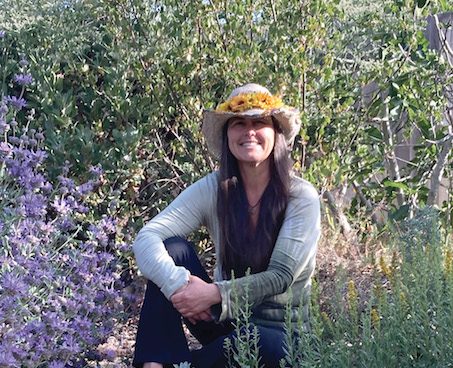
For new Board member Lori Whalen, having her garden featured on the OCCNPS California in My Garden tour several years ago was the magnet that drew her into deeper involvement with the chapter. With a long history at the Environmental Nature Center (ENC) in Newport Beach, Lori uses her decades of experience working in environmental education to inform her work on the Garden Tour Committee and Board. This article was compiled by Thea Gavin.
How It Began
Almost thirty years ago, Lori left a corporate job—“nylons and all”—and traded it for hiking boots in environmental education. “I volunteered at Peters Canyon Regional Park, where I learned a great deal from a ranger whose strong opinions and rebellious streak deeply appealed to me. From there, I worked as a naturalist with Inside the Outdoors, then The Nature Conservancy, and eventually joined the Environmental Nature Center in 2003, where I’ve grown from Program Coordinator to Vice President.”

To rewind even further, Lori credits her many years as a Girl Scout with giving her the opportunity to spend time outdoors. “Our troop leader, Linda Ford, regularly took us hiking. I was always at the front of the group, eager to see what was around the next corner.
“At the time, I didn’t think of this as a love of native plants—just a love of being outside. As I grew older, plants gradually became my ‘nerd thing.’ I even worked in a flower shop for more than four years during high school. But my relationship with native plants truly deepened once I began to understand them as communities.
“Learning how plants belong together—ecologically, visually, and historically—changed the way I saw landscapes. Once that clicked, there was no going back. Walking through intact ecosystems like coastal sage scrub, chaparral, or oak woodland felt grounding and right, while lawns, bird of paradise, and lily of the Nile began to feel jarringly out of place. Native plants feel like home because they reflect relationships shaped over time, rather than decoration imposed on a place.”
It’s All About Connection
“What inspires me most is helping others experience that same sense of belonging and recognition—not just beauty, but context, connection, and meaning.”
“Much of my work so far has focused on connecting people to native plants through education, access, and lived experience. Since 2003, my work at the Environmental Nature Center has been rooted in the belief that you can’t meaningfully connect people to nature without native plants.”

“I’m especially proud of helping make native plants feel approachable for people who are just getting started. I’m not a big public speaker, but I love talking with people at ENC and Tucker plant sales—watching someone move from curiosity to confidence is deeply rewarding.”
Works in Progress
“Right now, I’m focused on strengthening systems that support long-term native plant education and propagation at the Environmental Nature Center. That includes supporting native plant propagation and sales, and ensuring native plants are meaningfully integrated into public programs rather than treated as one-off topics.”

“I’m especially interested in building consistency—creating themed program series that reinforce learning throughout the year rather than isolated experiences. I’m also exploring how native plants can anchor conversations about climate resilience and community wellbeing, especially when those conversations lead to tangible, local action.
“My hope is that the native plant community continues to grow in reach, diversity, and impact while staying firmly rooted in ecology and care for place. Conservation is urgent, but it’s also relational—people protect what they understand and feel connected to.
“Plant sales and garden tours are important, but together I believe we can also shape policy, land use, and long-term stewardship in meaningful ways.
“I’m especially excited about engaging younger audiences. While I value people of all ages, I’m genuinely encouraged by the growing interest I see among younger folks—both within CNPS and through the horticulture internships at ENC. I recently attended a CNPS Advocacy Corps meeting and was inspired by the focus on concrete, actionable change. I’d love to see more of that energy at the local level.”
Learning and Mentors
“Plants are absolutely my ‘nerd thing.’ I love conservation, education, and horticulture, with conservation always feeling the most urgent. I’m especially fascinated by ethnobotany—learning how Indigenous peoples have used native plants for food, medicine, and daily life. I enjoy experimenting with these uses myself, often through teas, syrups, tinctures, salves, and food, while remaining mindful that many people hold far deeper knowledge and experience than I do.”

“Most of my native plant knowledge has been learned experientially. I learn best in the field, walking with people who know more than I do, pointing at plants and hearing their stories. One moment that has stayed with me was early on at The Nature Conservancy, when Trish Smith encouraged me to learn just one plant a day. On my first day, she chose Malosma laurina—laurel sumac—because it sounded like my name. I’ve never forgotten it.
“A mentor I deeply admire is Mike Evans—not only for his immense plant knowledge, but for his philosophy and artistic way of seeing landscapes. He understands how restraint, patience, and respect for natural processes can create beauty that feels authentic rather than imposed.
“A hero I’ve never met but feel profoundly influenced by is Robin Wall Kimmerer. Braiding Sweetgrass was life-altering for me. Her voice—as a scientist, writer, Indigenous person, and poet—offers a perspective that is both rigorous and deeply moving.”
Lori Recommends
“Everyone connects in different ways. I’m not naturally a joiner, and after leading many hikes over the years, group hikes aren’t usually my personal preference—but community is important for both human and planetary health. If you’re a joiner, go on a chapter hike.
“The OCCNPS board puts a great deal of care into curating speakers for chapter meetings, and I strongly encourage people to attend. If getting out after work is hard, take advantage of Zoom options—you can listen from your couch with earbuds in and still feel engaged and inspired.
“I also highly recommend the California in My Garden tour. Some gardens offer small takeaways; others may truly blow you away and send you home eager to get soil under your nails.”

A Garden Sanctuary
“My front yard, courtyard, and backyard are fully landscaped with native plants. Right now, you can see some of them peeking through the weeds after all the rain we’ve had (working on it!).
“My garden was on the OCCNPS California in my Garden Tour (I believe in 2023), and while it’s never ‘done,’ it continues to evolve and teach me every season—and, more importantly, it has become a sanctuary for me and countless other living things.
“Over time, the garden has truly become habitat. In the evenings, when I sit on the back porch, I can hear rustling in the shrubs, and during the day I’ve found skunk, opossum, raccoon, and even coyote tracks in my urban Costa Mesa yard. When I pull weeds, I’m always amazed by the diversity of insects and other small creatures that simply were not there when I removed the lawn years ago— with a flat shovel, on weekends, over the course of a summer.”
Words to Live By
“The more you know, the more you realize how much there is still to learn. After decades of studying native plants, I’m certain of one thing: curiosity never ends. Each answer leads to new questions about soil, disturbance, climate, pathogens, history, and relationships. Native plant knowledge is something you practice over time—it’s never finished.
Let the plants tell you what they need. They will—if you slow down and listen closely enough.”
Leave a Reply