
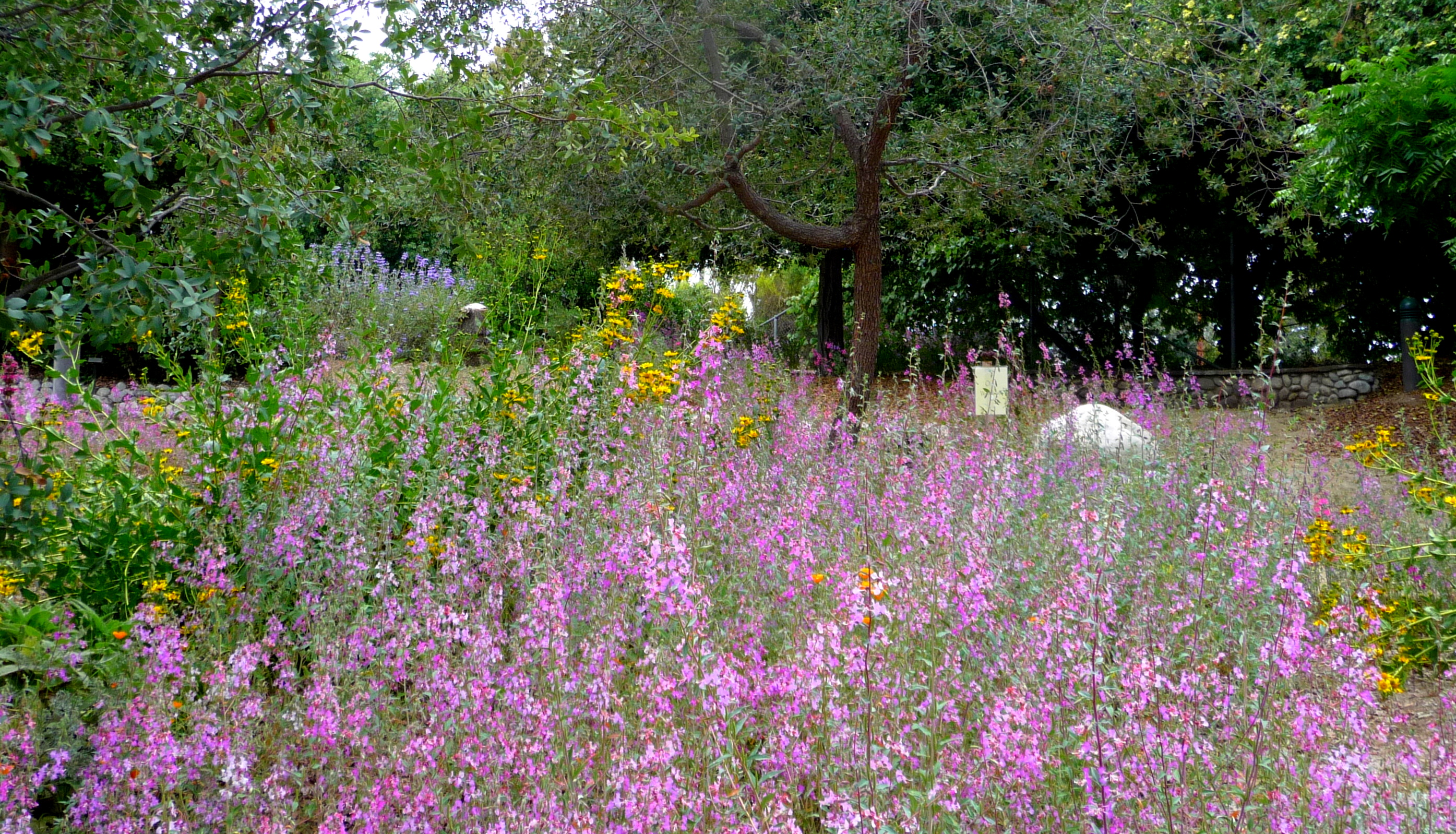
Guest author Dan Songster writes the OCCNPS Plant of the Month feature article about Elegant Clarkia, a lovely herbaceous plant you can start from seed.
| Common Name(s): Elegant Clarkia, Woodland Clarkia, Mountain Garland Scientific Name: Clarkia unguiculata Family: Onagraceae, Evening Primrose family Plant Type: Annual herbaceous plant Size: Often up to 4 feet tall (and almost as wide if given sun and spacing) Common Habitat: Sun or shade in grasslands, woodlands, and chaparral |
Note from Dan: Instead of having this article feature Elegant Clarkia during its spring bloom (when it is completely out of season to plant), I decided to share this article during the time when planting from seed really works! Try planting some Clarkia seed before the next rainstorm.
The Basics
Elegant Clarkia (also known as Mountain Garland) is an annual wildflower that animates California foothills and lowlands below 5000 feet. Finding a colony of them in the wild is always an unexpected pleasure. The species distribution ranges from Northern California into Baja California, Mexico.

This plant has been a garden favorite for a long time, with seeds being exported to England in the 1800’s. Elegant Clarkia is still planted and enjoyed by European gardeners. It is also beloved by California gardeners – and not just native plant gardeners – throughout the state.
Part of the popularity is due to its vibrant flowers. Its colorful, spidery-looking flowers show a variety of colors, ranging from white to purple to pink to crimson. They appear in leaf axils and are fairly regularly spaced along an erect stem. Blooming occurs from April through June. Graceful, colorful, easy to grow, it’s difficult not to fall in love with these beauties.

In the Garden
What an adaptable plant! Elegant Clarkia can be used in many ways in the garden. It is great as a filler plant in developing gardens, masking those bare areas between newly planted shrubs. (Don’t top dress too heavily over the seeds). I have also used them in combination with our native grasses like needlegrass, purple three-awn, even California fescue forming a sort of wildflower meadow.
Judith Lowry of Larner Seeds makes a good point about using them with silver-foliaged natives “I like it in islands among chaparral shrubs, like Artemisia californica (California sagebrush).”
Besides their colorful display in an English-style cottage garden, woodland garden, and borders, this (and most Clarkia) are excellent choices for the habitat garden – providing nectar and pollen for native bees and hummingbirds and seeds for seed-eating birds like finches and sparrows.

Due to their potential height, Clarkias can be used towards the back of beds and still be seen even over perennials like Penstemons and the smaller buckwheats and sages.
While wild Clarkias may like to grow in sandy, well-drained soils, this species does accept and thrive in clay soil too. It has a wide pH tolerance (6.5-8.5) so can even be grown in alkali soils. It does well in full sun – but also flowers in the high shade of trees, on the east side of walls, etc. You can imagine it is particularly useful for those challenging areas with a combination of full sun and shade.

When the big spring show is winding down, you can let the plants drop their seed in the early summer and they will naturalize wherever they find a compatible place in your garden. You can also pull some of the plants you think had the best colors and invert them in a large trash bag. The seeds will fall out in a few days and can be stored in a paper bag or glass jar until next fall when you might sow them in a special place in your garden. If you are purchasing seed, it’s easy to find mixed color seeds and when sown all together, the plants make a lovely and cheery sight. (Double forms are sometimes available from seed.)
Online Sources for Elegant Clarkia Seed
California Native Plant Society San Diego Chapter
Sowing the Seed
Elegant Clarkia seeds are best planted in late fall or early winter right before a good rainstorm. Loosen up the soil, mix the seed with sand (a good carrying agent), and toss it into the areas you have chosen for this plant to germinate. As is common with most annual wildflowers, Elegant Clarkia needs good soil moisture during its growth period. Seeds germinate after the winter rains start. If rains stop or are sparse, you should provide the additional water until plants are a couple feet tall.
If it comes up far too densely, you can thin the plants if you like. I have never had the patience but I have been told that seeds may be serially planted every two weeks to extend the bloom season into summer.
Care
Since it is an annual, you mainly have to get it growing and keep the area weeded and add some water until the plants become a couple feet tall, and then you should be good. If you have time, some gardeners tip-pinch them while young to promote a shorter, bushier plant especially where there is less light. During weeding, it’s nice that the seedlings of this Clarkia have a distinctive pinkish tone on the stem and also on the midrib of the leaf to differentiate it from young unwanted plants which may grow nearby, making it easier to select what to pull and what to leave!

Other Uses
Every year I look forward to using Elegant Clarkia as a long-lasting cut flower. It is impressive alone in a massive display or mixed with other native flowers. Like all Clarkias, it’s very long lasting as a cut flower, up to three weeks. It is really something to bring indoors to enjoy! Also, there’s nothing lovelier than a container filled with Clarkias growing on a porch or patio. Consider them also for the vegetable garden. They attract pollinators and I have read that the seeds are edible, raw or parched.
By the way, Elegant Clarkia is just one of the many excellent and beautiful Clarkia species you might consider for your garden. Read the following for a few other species as well.
More Information
For more useful information from Mother Nature’s Backyard about Clarkias, go to this link. Have you planted Clarkia from seed in your garden? Write us back and share your experience.


Leave a Reply