
Native Gardener’s Corner: Member’s Tips, Tricks, and Techniques
Guest author Dan Songster invited OCCNPS chapter members and local experts to share their experiences with Tree of Life Nursery, an iconic nursery that has propagated and sold California native plants while building relationships with people and ecology over the past 45 years.
The request for this edition of the OCCNPS Newsletter was:
“With the imminent closing of Tree of Life Nursery this December, please send your thoughts about what that nursery has meant to you. While normally we enjoy rather brief remarks, on this special occasion feel free to really express yourself and over time, we will print them all!”
Ron Vanderhoff-“I have also been in the local Orange County nursery business for the past 45 years. I have seen countless nurseries disappear over that time. Nurseries that I loved. Like the plants we sell, nurseries have a life span.
Tree of Life is not just a nursery that sells plants, it is experiential and a place to connect. Much like the living connections provided by healthy native plants, Tree of Life creates connections for its visitors and shoppers. Native plants support insects, birds, mollusks, reptiles, fungi and more. Native plants sequester carbon, stabilize soil, and cool our climate. People and plants also have connections and Tree of Life Nursery has facilitated those connections.

Just as native plants are the foundation of our local ecology so has Tree of Life Nursery been a foundation of our local human and social ecology. It has enriched our human relationships with the planet and its people, taught us lessons about our stewardship, and caused us to look much more closely and critically at our garden decisions.
Biologists and ecologists speak of Keystone Species in an ecosystem. Keystone Species are those few organisms that play an outsize, crucial role by their very presence. They have a disproportionately large impact on the complete environment relative to their abundance. Tree of Life Nursery is a Keystone Nursery, much like a Keystone Species. Within the nursery world Tree of Life has had a hugely outsize and disproportionate role in our local garden and landscape world.

Through those connections, interactions and experiences that Tree of Life has provided, it will now live on and evolve within all of us. Thousands of us have been influenced and changed by Tree of Life. Tree of Life Nursery is now a part of each of us. Live on.
Thank you Mike and Jeff, and all the countless staff for your lessons and influences.”
Chris Reed-“Accompanied by the scree of hawks and the circling of vultures, a visit to Tree of Life on a sunny, peaceful morning has always been to experience nature at its best. Pumping the knowledgeable staff for advice and departing with a trunk full of interesting new plants to try out in my garden has always bred excitement. I will miss this place enormously.”

Rama Nayeri-“I had a routine of sorts. After I have presented the concept drawings to the client(s), then, on a different day, we can go to Tree of Life to look at some proposed plants. I did not do this with every client but some. The client could see options and even things that I may not have considered. I also personally enjoyed frolicking around Tree of Life for fun. So now where do I go? I have options, but it will never be the same as Tree of Life.”

Amy Litton-“One of my many favorite memories came on a visit after word was out about the nursery closing. I was buying a micro sprinkler – I got one of only 3 left! – and bumped into a glowing Mike Evans. He shared with me plans for the next chapter, saying that since TOL had long operated like a non-profit and that soon there would be one! He was so happy, and I loved sharing this with people. It took the sting away.
Another favorite memory was when we were stuck in traffic on I-15. Two guys in a car were trying to get our attention. I had the “I killed my lawn – ask me how” bumper sticker on the car – they were the only people who ever asked! My answer was brief but the question elevated the trip and let me know the message was getting through.
I’ve enjoyed transforming our yard. Killing the lawn, learning from mistakes, watching trees like Elderberry and Catalina Cherry grow, experimenting – I let various ground covers ‘duke it out!’ – watching birds, lizards and other wildlife utilize the habitat that our yard slowly became. Having this resource in our midst was a blessing. Seeing a whole new crowd of gardeners discover the nursery was awesome. Engaging with staff, customers, the resident dogs – Tree of Life will most certainly be missed in a very big way.”

Lori Reznick-“First the crunch of the gravel in the parking lot, admiring the mature manzanita, buckwheat and mallows, then the gently filtered light at the entrance. A glance at the charming Casa La Paz adobe and sometimes, the darting of swallows to their mud homes under the eaves. Aahhh, the flitting moths and butterflies: a sense of peace (except on buzzy CNPS member days!) and then the hunt for what you came for, or a look around for inspiration. Eavesdropping on consultations by others, a hello to Mike and a pat for Dakota, then crunch, crunch as you wheel your new precious charges to the car for the journey home.”

Joanne and Doug Schwartz-“Mike, his TOL Nursery, its staff and his blog posts have guided us on a beautiful cultivation path. Our appreciation covers a couple of decades and our garden thrives with his plants and methods. We’ll always revel in Deep Soaks and Refreshing Sprinkles!
We wish him, always
A large Oak tree (and its friends) to work and rest under
Deep soil and fluffy duff in a pollinator and insect rich habitat
Plenty of pure water from natural sources
Blossoms and flowers to attract a community to love native plants and habitats
Zillions of happy, vibrant little seeds who crave his care and create succession.
We also wish Mike great success and a continuing rich life with his new non-profit, California Native Horticultural Foundation.
See you again in the wilds while we search for fungi!”
Lori Whalen-“Thank you for the opportunity to contribute to this very special edition of the Native Gardener’s Corner.
Tree of Life has been monumental in furthering the popularity and acceptance of native plants in California. I have been shopping there—for myself, for landscape design clients, and for the Environmental Nature Center—for more than two decades. Every visit has been an experience, not just an errand. The nursery itself is aesthetically spectacular: mature sycamores and oaks casting shade, the strawbale office, and the welcoming retail section. The staff have always been both helpful and deeply knowledgeable.
But what has truly made Tree of Life extraordinary is the leadership of Mike Evans. He is a visionary. Someday, long after we are all gone, people will speak of him the way we now speak of Theodore Payne. Mike doesn’t just know his plants or how to cultivate them into a successful landscape. His philosophy has always gone deeper: to create gardens that invite exploration and discovery, where plants come together in mutualistic ecosystems—visually, scientifically, and spiritually. He has taught countless students and gardeners the significance of a well-placed log, a stone, or the way a path can shape how we experience the land.

To Mike, native gardening is never simply about digging a hole and hoping for spring blooms. It is about weaving the garden into daily life, embracing the seasonal rhythms, and experiencing the landscape as an evolving companion. Tree of Life has been an expression of this philosophy, and while its closing marks the end of an era, I am not worried for the future. Too many people have been touched by this place and this way of thinking. Native plants will continue to thrive in our gardens and in our culture because Tree of Life inspired a wave of growers, nurseries, and horticulturists who will carry this torch forward.
Thank you, Tree of Life, for sowing this vision decades ago. The seed you planted has taken root, flowered, and will continue to grow.”

Laura Camp-“I worked at Tree of Life Nursery for more than 25 years, so my perspective is not the usual one! Tree of Life was a special place: with the combination of the soulful buildings and the native plant gardens, adjacent to wild Orange County, it smelled and sounded and looked like authentic California.

My memories are dominated by special plants in special corners, some of which are not even alive anymore, but it’s where I learned the names of our native plants, and I learned how they grow in the pots and in the garden, and I eventually started hiking and extending that learning out into our parks and preserves. I’ll remember watching the Paradise manzanita grow larger and more beautiful every year. The Douglas fir pair that grew so tall so fast, until one of them failed and died on top. The humongous sycamores, and the woodpeckers and hawks who called them home. The agave once-in-a-lifetime flowering events. The huge coast live-oak that fell down next to the office one day, while I watched. The seasonal beauty of redbuds. The beautiful trio of Louis Edmunds manzanitas (in the redwood grove) that were growing old by the time I parked in front of them for the last time. The snowdrop, the Bonita Linda coffeeberry, the patch of hummingbird sage, the Lepechinia hastata, the signature coast live-oak outside the barn, the bright green lemonadeberry by the creek, the list of special plants is truly endless, each plant with its own history. And I’ll remember all the employees and other people I shared the space with, including many CNPS volunteers from multiple chapters. Thank you, Tree of Life Nursery, and I’m glad I played a small part in the story.”

Bart O’Brien-“Mike, Jeff, and their Tree of Life Nursery have been instrumental in the recognition of the value of California native plants in gardens and landscapes at all levels throughout Southern California, though the influence of many of their plants have gone statewide and even beyond. Up until the establishment of Tree of Life Nursery, there really had not been such a large, capable, native-centric nursery that nurtured not only the public’s thirst for these plants, but also provided the full breadth of contract growing for landscape, restoration, habitat enhancement, and endangered species projects. It takes considerable time, effort, dedication, and space to create such an impactful nursery business. Off the top of my head, I cannot think of any other Southern California nursery that’s had such a massive positive impact on the horticulture of native plants on such an enormous scale. Their early friendship with John Dourley, then Superintendent of Rancho Sana Ana Botanic Garden, was transformational for all involved. Mike’s enthusiasm and zeal for education and outreach has greatly increased awareness and acceptance that native plants truly belong everywhere. Besides their wonderful plants (too many to mention!), there are three aspects of their business that always come to my mind when I think about the nursery: first, their early work involving mycorrhizae; second, their success in keeping Argentine ants out of their plants and nursery; third, their promotion and demonstration of low impact construction technologies. We as Southern Californians owe them our deepest gratitude for 45 years of exceptional service. They can now rest on their laurels of Umbellularia – or maybe Heteromeles – though I have no doubt they will continue their Californian adventures.”

Patty Roess-“ I had the privilege of managing the retail area at Tree of Life Nursery for 23 years. Every day upon entering the nursery was special, as I was filled with the sights and sounds of nature, like being greeted with the cries from the Red-shouldered Hawk or the swirling flights of the Cliff Swallows and, of course, the Turkey Vultures hanging out in the giant sycamore tree.
When I began my time at TOLN, the retail selling area was located around the Roundhouse. It was delightful to base myself under the enormous grapevine that provided shelter from the elements and was charmed being engulfed in such a natural setting. The selling area was much smaller than but we had a steady stream of enthusiastic customers that encouraged us to grow more varieties and so, as we did, the selling area expanded which eventually included a new straw-bale built store which include a wonderful stone fireplace. As we grew, the charm remained, and we became known as the best kept secret.
The enthusiasm among the shoppers was contagious especially when they were sharing ideas, information and tips with each other and the staff. So many customers became good friends. I was so happy to be a part of the family of dedicated native plant enthusiasts and the very special Tree of Life Nursery.”

Dan Songster-“Driving up the Ortega Highway and turning into the nursery, past its hand painted-wooden sign, along the gravel road, staff smiles, dog tails wagging, and plants galore! Think of it! Over forty years as a nursery in a market that did not remotely favor natives! I remember in the 1970’s and early 1980’s when getting native plants for a landscape meant traveling the state to find what you could. Rancho Santa Ana Botanic Garden (now California Botanic Garden) had some material once or twice a year. Some various CNPS Chapter plant sales occurred in the fall, your plant friends might have a plant or two grown from cutting or seed-but to actually place an order from a reputable local nursery and drive down and pick them up? No way! What a gift! Tree of life allowed landscape companies, designers, and architects to design landscapes knowing they would actually be able to have a local source for buying the plants they recommended.

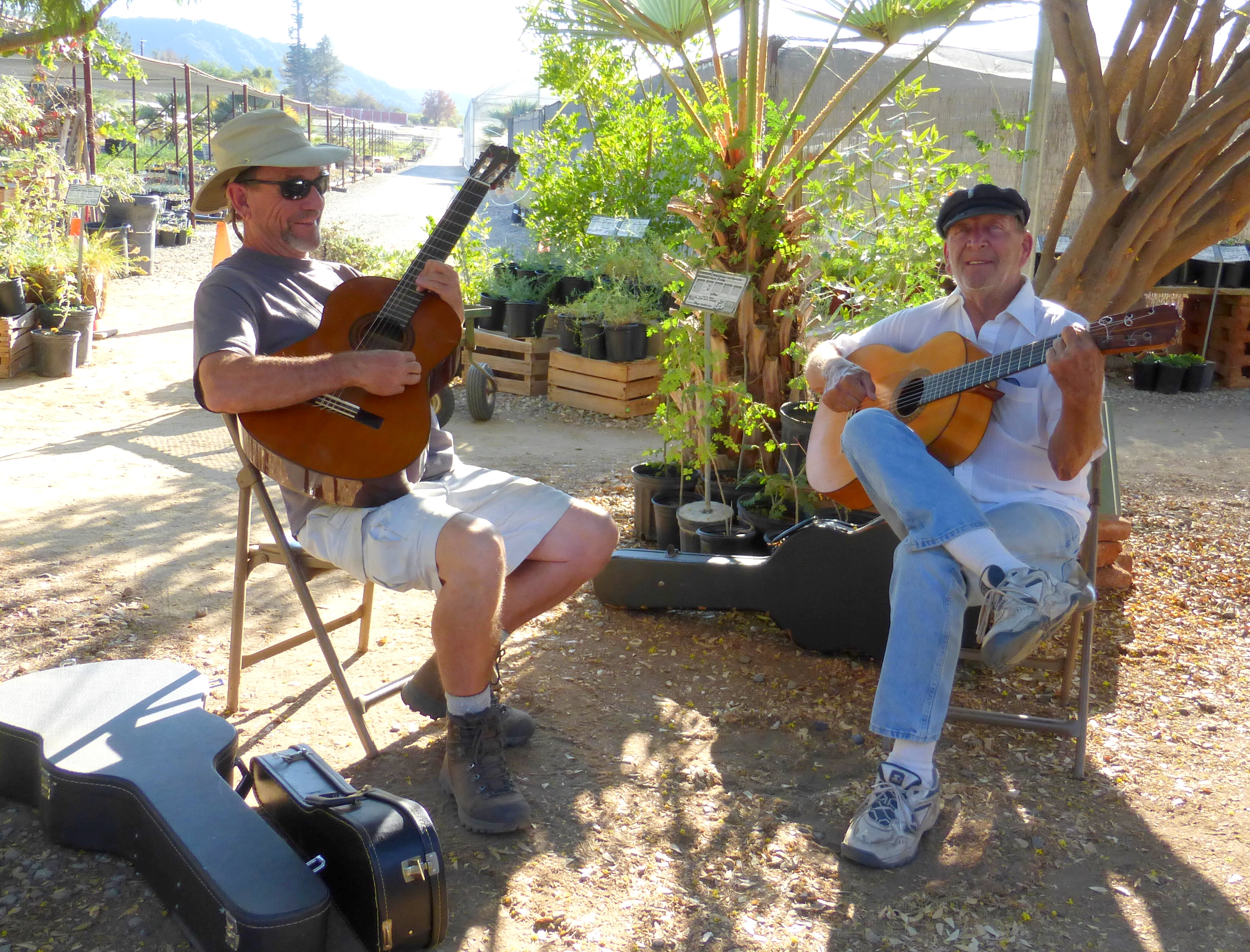
I enjoyed purchasing primarily as a wholesale buyer, which is how Tree of Life started. Slowly it expanded to include limited retail hours and eventually opened a full-time retail area in the beautiful Casa La Paz. It was in this era that homeowners really became aware of the nursery and the appeal of that lovely space, its wonderful selection of plants, the pleasure and inspiration of speaking with the people who worked there–people who were often as interested as you about native plants! I found a new richness at the nursery as it moved into its current retail sales with an ever-expanding display of the plants, a plethora of classes, wonderful sales staff, beautiful art and books, involvement and engaging with indigenous tribes, and so much more. Visiting became much like going to a friend’s home-a friend who has a wonderful garden to enjoy and who happens to have hundreds of lovely native plant species for sale. There might even be music and food!

Of course, I cannot imagine what our Orange County native plant scene would look like if Tree of Life had never existed. Think of it. No close source for plants, no Saturday classes, no speaker at the drop of a hat (thanks Mike), a very limited chapter plant sales, no personal advice about growing our natives from the great and caring staff members, none of those how-to videos, no lovely articles on the nursery’s blog and/or website, (Oh, those essays from Mike Evans!) and an entire philosophy involving.
From the perspective of someone involved with OCCNPS leadership, their support for the chapter was ongoing from an early date and so important. Our chapter plant sales used to be held at UC Irvine Arboretum where long time Tree of Life employee Ramiro, would drive a huge truck full of native plants to the Arboretum at UCI Arboretum and we would offload them all. What a chore! Eventually (and thankfully) the nursery offered to host our plant sales on their grounds and they have been held at the nursery for the last 20 years. Another immense benefit of having Tree of Life so close was that several of our chapter’s board members have been gleaned from their staff, including Laura Camp who served as chapter president AND eventually president of the State CNPS!

So, Tree of Life Nursery has been more than an excellent nursery. It has been a home base for all things native, an institution of learning, a school for native philosophy, a launching pad for those starting out with natives as well as a continuing inspiration to us folk who may have been acquainted with these special plants for decades. With Mike Evans and Jeff Bohn as partners in a venture that anyone would have described as risky, they never seemed to be looking back, every step was forward.
Expansion of the nursery to include the lovely display gardens, an ever expanding list of native plants, more and more classes and tutorials, and a wonderfully informative website. What a huge adventure building something between a business and a lifestyle, including:
More thoughtfully constructed buildings.
With so much hard work, it is good to see they have been deservedly recognized in the world of horticulture including awards from our chapter of CNPS and from the state organization itself.
But I believe their largest reward was the people they met along their journey and who, whether as a customers, staff, or CNPS members–became part of the Tree of Life Family. I must say it has been a wonderful feeling being a small part of that intelligent, engaging, generous, kind, talented, professional, humorous, curious, and welcoming family all these years.

Although saddened by the nursery’s closing, I must say that I am GREATLY encouraged by the formation on site of the California Native Horticultural Foundation. Check it out!”
Question for our November/December newsletter is: Winter is here and it’s time for those chores that make our native gardens ready for the coming spring months ahead. What is your favorite chore to accomplish? A job that when finished, makes you stand back and say, “Yeah!!”
Leave a Reply