
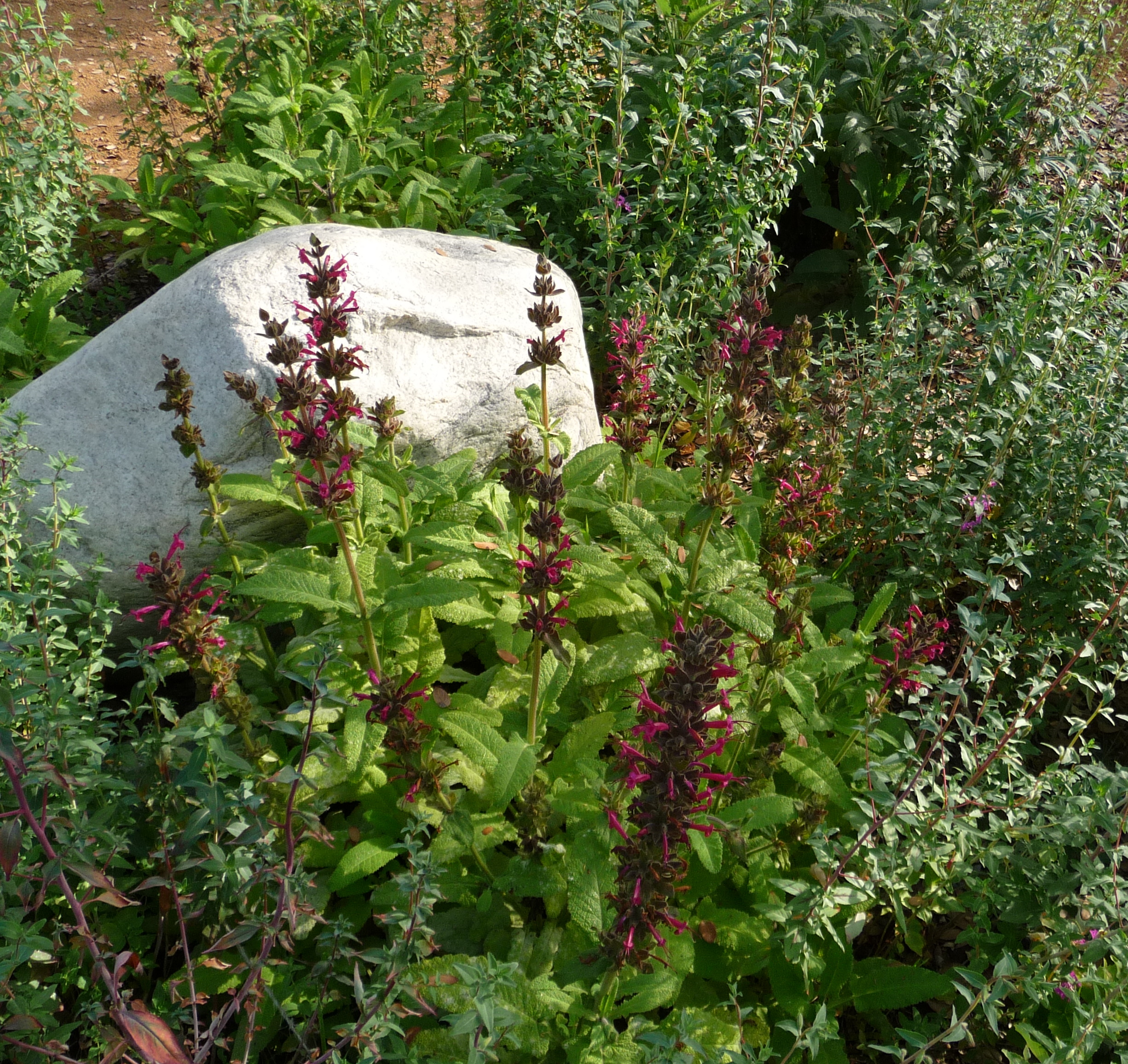
Guest author Dan Songster submitted this article featuring Hummingbird Sage (Salvia spathacea) as the plant of the month for The Orange County Chapter of the California Native Plant Society (OCCNPS) for February.
- Type: Semi-evergreen herbaceous perennial
- Light: Likes dappled light best but can take full sun on coast
- Soil: Good draining soils are best, but can take clay soils too
- Water: Drought tolerant to occasional waterings
For the past month, the volunteers at the Golden West College Native Garden have been keeping an eye on the seasonal growth of hummingbird sage (Salvia spathacea).

We planted hummingbird sage beneath the Rod Wallbank Oak Woodland (mostly comprised of his favorite, Engelmann Oak (Quercus engelmannii). Already this patch of low-growing foliage is showing the beginning of their tall, magenta flower spikes that attract hummingbirds like moths to a flame. Hummingbird sage is the only truly native red sage in California.
Where it lives
Hummingbird sage is commonly found growing on shady slopes in oak woodland, chaparral, and coastal sage scrub near the coast from Camp Pendleton to Napa Valley. There are a few populations here in Orange County.
This sage flourishes in dappled sun under coast live oaks where it produces foliage about a foot tall. Although it prefers some shade, it can be planted in the full sun along the coast. Hummingbird sage will tolerate all types of soil, from well-draining to heavy clay. The aromatic leaves can reach 6 inches long and are slightly wrinkly on top and soft and fuzzy underneath.

Ruby red flowers
Salvia spathacea blooms from late winter until July. It is one of the showiest blooms of our native sages, with 1-2 feet tall flower spikes that hold whorls full of long ruby red flowers. The blooms are very attractive to hummingbirds and they will defend patches fiercely.
Seed-eating birds also enjoy snacking from the dried flower heads. After most of the dried seeds are gone, we will deadhead the flower stalks to keep the patch looking tidy. You can also prune back to new growth in late winter and pinch prune year-round to keep the patch thick and lush.

Maintaining this sage
Salvia spathacea is an extremely tough plant and after the first year can usually make it through summer without any irrigation. This sage manages the heat by dropping its leaves in the dry season. If you water your hummingbird sage about once or twice a month, you can sometimes keep them green year-round.
Hummingbird sage will also do well in containers. Pests and diseases are a minor concern with powdery mildew sometimes coating the leaves which can be either pruned back or simply left in place.

This sage spreads by rhizomes or underground runners, forming dense mats of large arrow-shaped, bright green leaves that can eventually spread into patches up to 8 feet wide when happy. If it begins to encroach, simply dig up the plants and move them to another spot in the garden or give them to a friend. They are easy to grow from root cuttings, especially if a bit of soil is left clinging to the roots.
Culinary Uses
Hummingbird sage is in the Lamiaceae, or mint family, and is therefore edible as are most members of this family. You might like to try this type of sage in a cookie or shortbread recipe like Susan Krzywicki’s California Native Sage Shortbread. As Susan notes in the recipe, one can use any of our native sages but Salvia spathacea is sweeter and not as pungent as the other salvia species. A friend suggests baking these shortbreads low and slow, keeping her oven at only 300 degrees, and keeping a sharp eye out to make sure they do not over-brown. This cookie is not too sweet and is perfect with an afternoon cup of tea in the garden.
Speaking of tea, hummingbird sage makes a great herbal hot or iced tea. A recipe for this tea can be found on this native plant blog Mother Natures Backyard (Making Tea From California Native Mint Leaves).
Easy to grow, nice and low, accepting of various soils, light, and watering styles–with its beauty, habitat value, and culinary benefits you will delight in having hummingbird sage in your garden. Enjoy!

Leave a Reply