
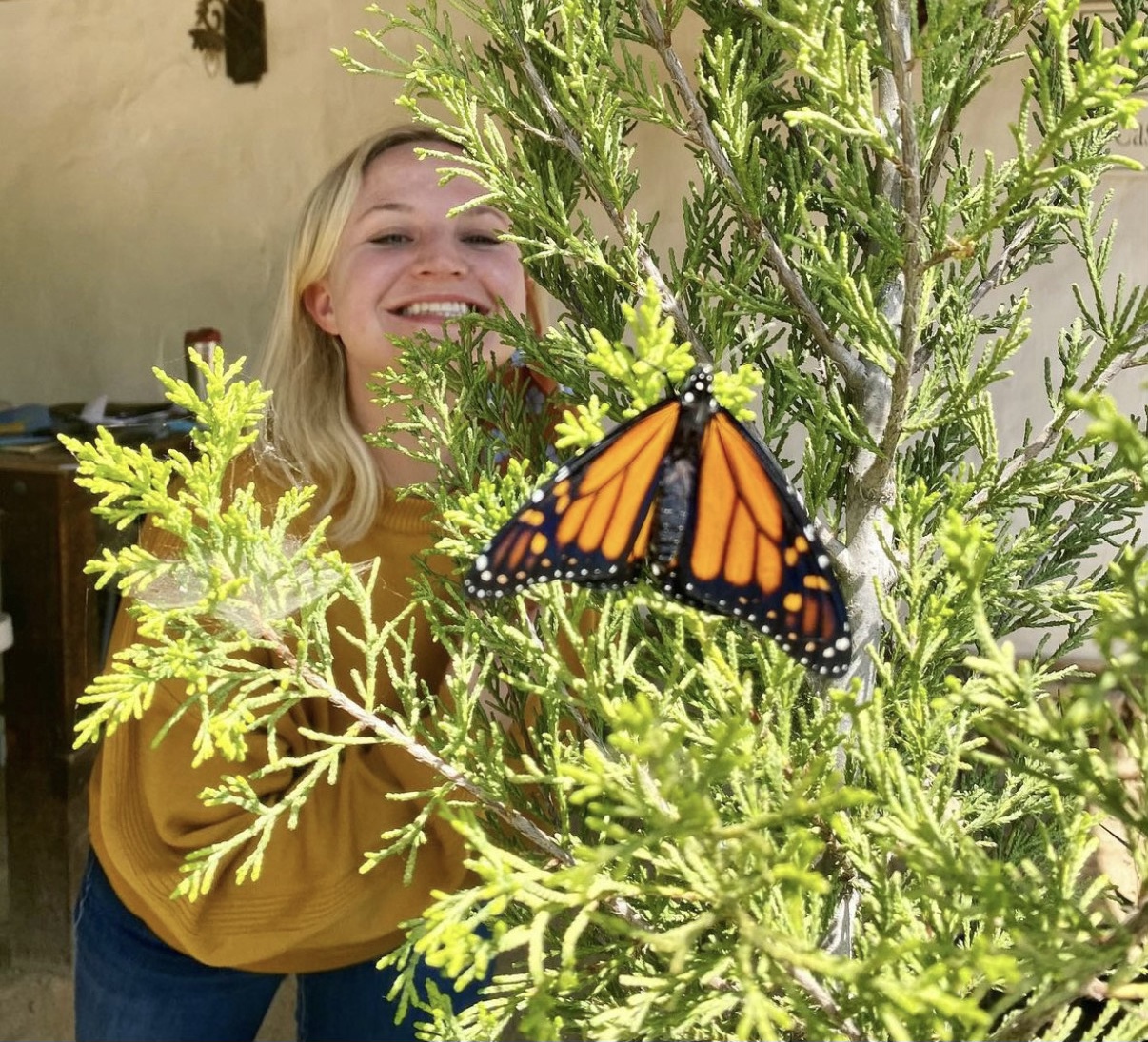
Thea Gavin compiled this profile about Katie Newman, one of the Orange County Chapter of the California Native Plant Society’s (OCCNPS) newest board members.
Katie Newman started her journey with CNPS six years ago and has been on the Orange County Chapter board since 2024. Through her work on the Communication and Outreach teams, Katie helps the chapter share native plant information and activities via social media.

Here are some of Katie’s insights into her past, present, and future with California native plants:
PAST
Q: How did you get interested in native plants?
My parents were both avid gardeners. Some of my earliest memories are helping my mom in her veggie garden or cutting roses with my father. My brother was a huge geology and entomology nerd so we would collect rocks and bugs together, but most of my time in the outdoors as a child was spent at the beach.
It wasn’t until I transferred to UC Davis and studied archaeology and geography that I became an avid hiker and camper. I remember hiking through the redwoods near Point Reyes National Seashore with my geography class. I looked down and saw a trillium for the first time. I was in complete awe of its beauty and drew a picture of it in my field journal so I could identify it later. (This was before iNaturalist became widely available.)
While studying California archaeology and basketry at UC Davis, I gained insight into the plant materials traditionally used by indigenous cultures for tools and food. After graduating, I worked as an archaeology technician for a few years, identifying native flora at various sites to help document the environmental history of each site of cultural significance.

When I moved home to support my family, I found myself missing the experience of working outdoors, so I began volunteering with the Newport Bay Conservancy. Their Naturalist Program was incredible, and it was through Ron Vanderhoff’s course on native plants that I first discovered CNPS.
Later, I joined Tree of Life Nursery as the wholesale sales manager, where I gained an unparalleled education in California native plants, horticulture, and conservation. Those four years were truly invaluable and I feel incredibly fortunate to have learned from such knowledgeable and passionate individuals.
Q: Do you have any “heroes” or mentors who shaped your interest in native plants?
Just one hour of training with Ron Vanderhoff at the Newport Bay Conservancy opened my eyes to the importance of local flora and fauna. His unbridled passion inspired me to dive deeper, eventually leading to my job at Tree of Life Nursery. The people I met there continue to shape my interests in countless ways. Plant enthusiasts each have their own unique connections to the natural world, and being surrounded by these “plant nerds” 40 hours a week for four years was a constant source of professional and creative inspiration. You all know who you are!

Q: What native plant projects have you worked on that stand out in your memory?
One of the first big growing contracts I worked on at Tree of Life was for the Newport Bay Conservancy’s Big Canyon Restoration job. It was very cool to grow plants for the organization that first stirred my interest in local plants. That will always be a favorite memory.
I am just happy to be a part of the native plant community. There are so many inspiring individuals doing great work with California native plants in conservation and horticulture. I am grateful for the opportunity to help them out by promoting them or giving them horticultural advice.
If a friend is on a hike and sends me a pic for identification or if someone calls me with a “plant emergency” – that brings me true joy.
PRESENT
Q: What native-plant-related projects are you working on?
I am finishing my Horticulture Certificate at Orange Coast College right now and working on social media for CNPS Orange County. Social media is rewarding because I get to promote all aspects of the nonprofit and learn from everyone on the board.
Q: Do you have any native plants in your yard?
I have . . . a lot. I am fortunate enough to have a sizable patio at my bungalow-style apartment! I have a pet tortoise, so I have a lot of natives that she can eat, like Carex species and Achillea millefolium.

The only challenge with my patio is that it’s mostly shaded, so I’ve planted a small Sambucus tree along with Iris, Epipactis gigantea, Lonicera subspicata, Polypodium californicum, Ribes sanguineum, Monardella, Sisyrinchium bellum, Clinopodium douglasii, Salvia spathacea, Dudleya sp., Holodiscus discolor, and of course, so many Heuchera. I’ve grown to love my little shaded garden.

I also have some non-natives like a camellia, Japanese maple, staghorn fern, and a gardenia. They remind me of my parents so they will stay. The Japanese maple is planted near the water spigot surrounded by water-loving natives like the stream orchid, iris, and Yerba mansa. The gardenia and camellia are in pots so they can get different watering than the rest of my plants.
I am a firm believer that you can make a California native plant garden work with your favorite non-native ornamentals.
FUTURE
Q: What are your goals for the chapter and/or the California native plant community at large?
The big-picture goal is to change the stigma around California native plants and reshape what Californians consider a “beautiful landscape.”

There’s a lot of misinformation about fire ecology and the durability of natives in landscaping. My role in this broader effort is to boost attendance at our outreach events through social media.
Our board works tirelessly to create fun and educational experiences for our members and I want to ensure they get the recognition and participation they deserve.
Q: What OCCNPS activities would like to encourage others to try?
The plant sales and garden tours are so engaging. I love chatting with people about their gardens and how gratifying it is to plant with California native plants.
Our chapter sponsors lots of hikes—give one a try! There are always little surprises waiting to be discovered, like the first trillium I saw. It’s not just the mountain peaks and grand views that make getting outside worthwhile; it’s those quiet moments of discovery along the way.
Q: What is one thing you have learned about native plants that you didn’t know when you started this journey?
I was surprised to learn how rarely California native plants are used in the landscape industry. Given their low-water and low-maintenance requirements, I assumed they’d be more common choices. When I transitioned from working at a wholesale tropical plant nursery to Tree of Life, I remember some former customers expressing genuine concern—it really showed the stigma native plants face. Now of course, I know many talented landscapers who work with California natives and they’re helping to shift the conversation in a positive way.

Q: Final words of encouragement?
Just keep sowing seeds and come to an OCCNPS meeting! There are so many knowledgeable people at CNPS who want to share what they know. We are an organization filled with scientists, accountants, designers, artists, and poets. Whatever your level of plant knowledge, you will find your place and find inspiration with OCCNPS.
Leave a Reply