
Plant of the Month
This article was written and submitted by guest author, Dan Songster.
- What: Heteromeles arbutifolia–Toyon, Christmas berry
- Type: Evergreen shrub or small tree
- Light: Likes full sun but can get by with light shade
- Soil: Good draining but can take heavy soils too
- Water: Has low water needs once established

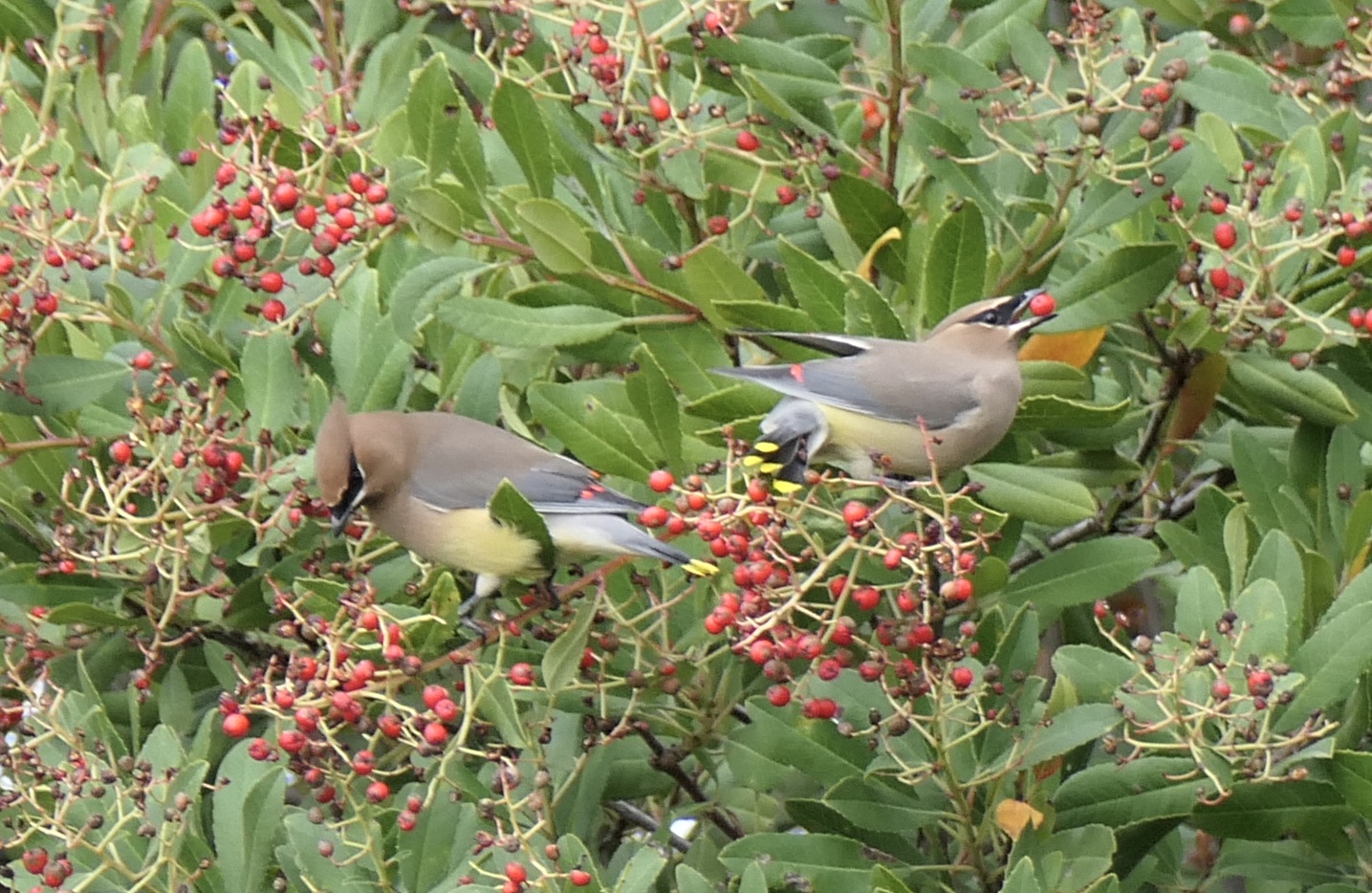
Here is one native so adored that I can almost fill this page with wonderful quotes singing its praises! Toyon, also called Christmas berry, is an evergreen shrub and a member of the rose family. Toyon can grow in sun or partial shade and is drought tolerant. Its natural habitat is chaparral and woodlands below 4,000 feet and it can be fairly tolerant of most soils. Although not considered “showy,” there are clusters of creamy white blooms in spring which are an attractive addition to the garden.
This plant is a versatile performer growing 8-15 feet tall and almost as wide. It can be trimmed to reduce its size if needed, and although the production of its lovely berries can suffer from excessive pruning when the plant is flowering, a maturing toyon can be trained as a lovely patio-sized tree.

While many sources have stated that the toyon is one of the only native plants that is known by its native American name, that is only partially true. The Ohlone name for toyon is actually ‘totcon,’ and the name toyon is thought to be a Spanish alteration of that word. The Ohlone, along with other California tribes, use parts of this plant for food and medicines and implements.
Nevin Smith, in his book Native Treasures, sings an ode to toyons in the chapter Toyon on My Mind:
In June and July each plant is decorated with many large, branched clusters of cream to white five-petaled flowers…followed by little green berries that expand throughout the summer and fall. As the nights cool, the berries begin to change color, finally taking on hues from crimson through vivid reds to an occasional orange or yellow…the berries…have proven so popular for Christmas decorations that local ordinances have been passed to forbid their collection on public lands.
Ralph D. Cornell, supervising landscape architect for UCLA from 1937 to 1972 thought very highly of toyon stating:
Any plant that encourages bird life, supplies the bees with an unexcelled source of honey, gives food to man, furnishes tannin from its bark, protects arid slopes from erosion, paints the landscape with vivid colors and carries joy into the home at Christmas time, when no other berries are available to most Californians, surely deserves the protection of man, whom it serves so well.
I can add nothing to these two sources except, find a suitable place in your garden and plant one! (If you are near Huntington Beach, we have seedlings at Golden West College Native Garden for a nominal fee-contact songster@cox.net for information.)
Author’s Note: “Davis Gold” is a great cultivar of the yellow-berried form of toyon (Heteromeles arbutifolia var cerina) that almost glows in the light of early morning or dusk. It has a more upright and symmetrical form that the straight species does not possess, and can be more reliably used as a small tree.


Leave a Reply